Best Time to Visit Sri Lanka: A Month-by-Month Guide
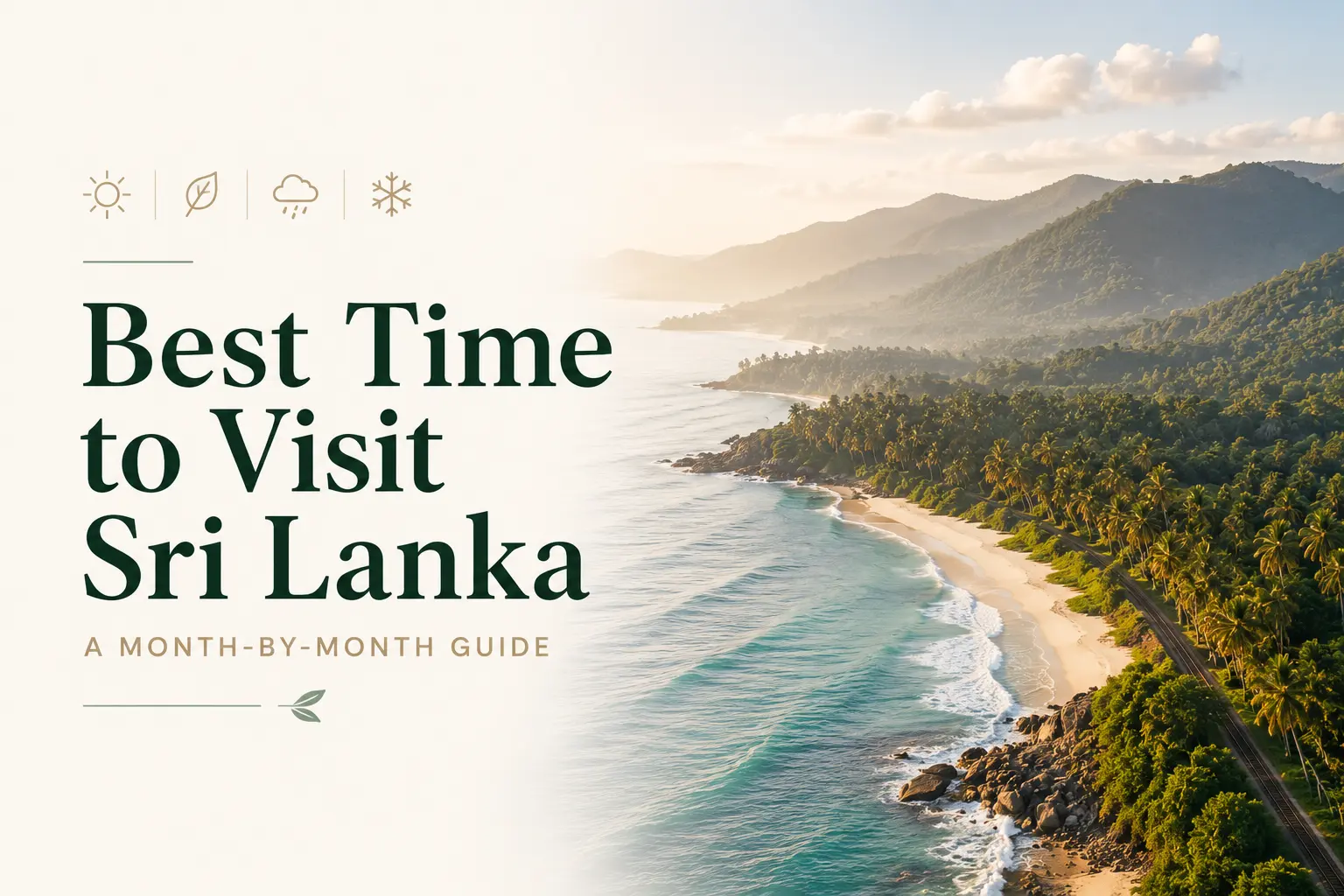
Quick answer: Sri Lanka has two monsoons affecting opposite coasts, so there’s no single bad time to visit — just the wrong region for the wrong month. December to March is best for the south and west coasts and hill country; May to September is best for the east coast. The Cultural Triangle and hill country are good most of the year.
Because Sri Lanka runs two separate monsoon systems at once, “when should I go?” really depends on where you’re going. Here’s how to think about it.
Sri Lanka’s Two Monsoons, Explained Simply
- Southwest monsoon (“Yala season”): roughly May to September, affects the south and west coasts (Galle, Bentota, Colombo) and the hill country
- Northeast monsoon (“Maha season”): roughly October to January, affects the north and east coasts (Trincomalee, Arugam Bay)
When one coast is wet, the other is usually dry and sunny — which is why Sri Lanka works as a year-round destination as long as you match your region to the season.
Month-by-Month Overview
| Months | South & West Coast | East Coast | Hill Country & Cultural Triangle |
|---|---|---|---|
| Dec – Mar | Best weather, peak season | Wetter, less ideal | Dry, good for climbing Sigiriya/Dambulla |
| Apr | Hot, transitional, Sinhala & Tamil New Year | Improving | Hot, occasional afternoon storms |
| May – Sep | Southwest monsoon, wetter | Best weather | Generally good, occasional rain |
| Oct – Nov | Transitional, short storms possible | Northeast monsoon begins | Good, cooler in the evenings |
When Is Peak Season in Sri Lanka?
December through March, especially around Christmas and New Year. This is when the south and west coasts, the most visited parts of the island, see their driest and sunniest weather — book accommodation and tours well ahead if traveling in this window.
What’s the Best Time for a Safari?
The dry season, roughly February through July depending on the park, since animals concentrate around shrinking water sources, making leopards and elephants easier to spot. This overlaps well with the good-weather window for both the south coast and Cultural Triangle.
Is There a Bad Time to Visit Sri Lanka?
Not really — only a mismatch between region and season. April and October act as transition months across the island, with short, heavy afternoon downpours possible almost anywhere, but these showers typically last 1-3 hours rather than ruining a full day. Rain in Sri Lanka rarely means a washed-out trip; it usually means adjusting the day’s plan around a shower.
What About the Sinhala & Tamil New Year (April)?
Mid-April is a major local holiday, with street festivals and a distinctly festive atmosphere — a great time to experience local culture, but also when domestic travel spikes, so book accommodation and transport early if your trip falls in this window.
Planning Around the Weather
The real skill in timing a Sri Lanka trip isn’t picking “the best month” — it’s routing the itinerary so you’re always in the region with good weather at that point in your trip. This is exactly the kind of planning we build into every tailor-made itinerary. Take a look at our tours by trail or get in touch about custom trip design around your travel dates.
FAQs
What is the overall best time to visit Sri Lanka? December to March offers the most reliably good weather across the greatest number of regions, including the south coast, west coast, hill country, and Cultural Triangle.
When should I visit Sri Lanka’s east coast? May to September, when the northeast monsoon has cleared and the east coast (Trincomalee, Arugam Bay) sees its driest weather.
Is it worth visiting Sri Lanka during monsoon season? Yes, as long as you’re on the right coast — monsoon rain tends to come in short, heavy bursts rather than all-day downpours, and choosing the opposite coast avoids it almost entirely.
When is the best time for a wildlife safari in Sri Lanka? Roughly February to July, when the dry season concentrates wildlife around remaining water sources, improving sighting odds.
Do I need to book further ahead for a December-March trip? Yes — this is Sri Lanka’s peak season, particularly around Christmas and New Year, so accommodation and tours should be booked well in advance.